For the last couple of years I've been building consumer brands on my own, without a team or much of a budget behind me. The first was just finding its feet when a law changed and wiped out the whole category, forcing me to shut it down. Now I'm building Rendered, a small men's skincare brand. It's still early, but I'll be documenting the process on here, so stay tuned.
Most of them think they are, but the copy is written for a demographic instead of a real person. It's usually something like "guys in their thirties who care about their skin." Nobody has ever read a line like that and really resonated with it on a deep level.
So the ad gets a flicker of attention, runs for a week or two, and quietly dies in the account, and everyone blames the creative when it was never solely the problem. The real issue is that every ad is the same idea wearing a different outfit, the same person, the same angle and the same register, so Meta reads the whole batch as one ad, picks a winner, and stops bothering to show the rest, which is when costs drift up and incremental reach stops compounding.
The fix was never a better hook or a slicker edit. It's researching deep enough to find the actual people hiding inside a "target audience," the man with eczema who's stuck in a cycle of dependency on his steroid cream and now carries a quiet anxiety about it, who keeps his sleeves down in summer because it's spread across his arms and he'd rather be too warm than seen. Once you can picture him that clearly you can write to him, and then to the next persona, which is how the account keeps finding someone new instead of burning through the same warm pool until there's no one left.
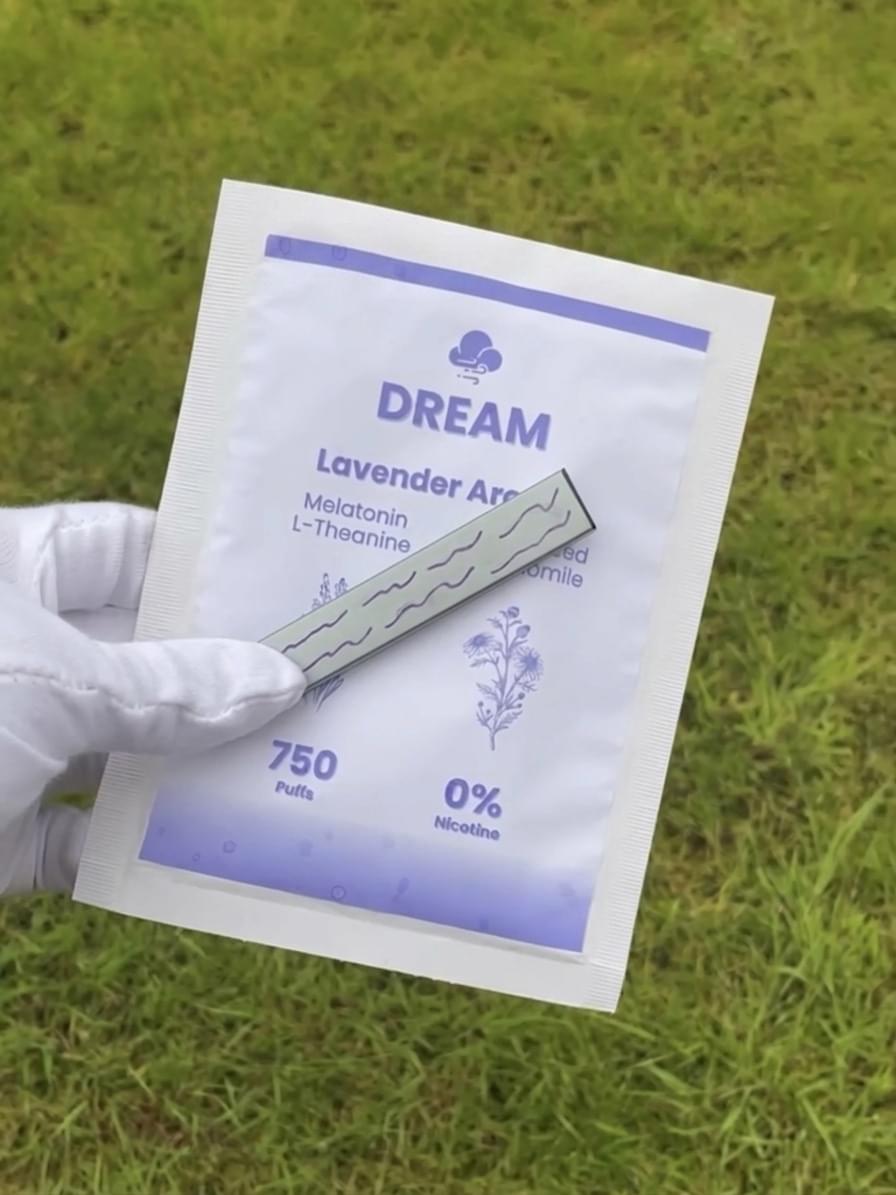
In 2024 I started a brand based on a simple psychological insight: people quitting smoking don't only miss the nicotine, they miss having something to do with their hands. So Myst was born. My resources at the time were very limited, so I had to rely a lot on image ads and low-prod content I could film in the house, but with a lot of work I got it off the ground on organic promotion alone.
Sadly, just as I was about to commit to a large stock order, the 2025 single-use vape ban wiped out the whole category and I had to close the doors.
Looking back, I had no real system. I ran on instinct and copied whatever looked like it was working, and some of it genuinely did. But I couldn't have told you why it worked, or repeated it on purpose. What that brand did give me was a real feel for the difference between good and bad creative strategy, which is why I still look back on it fondly.
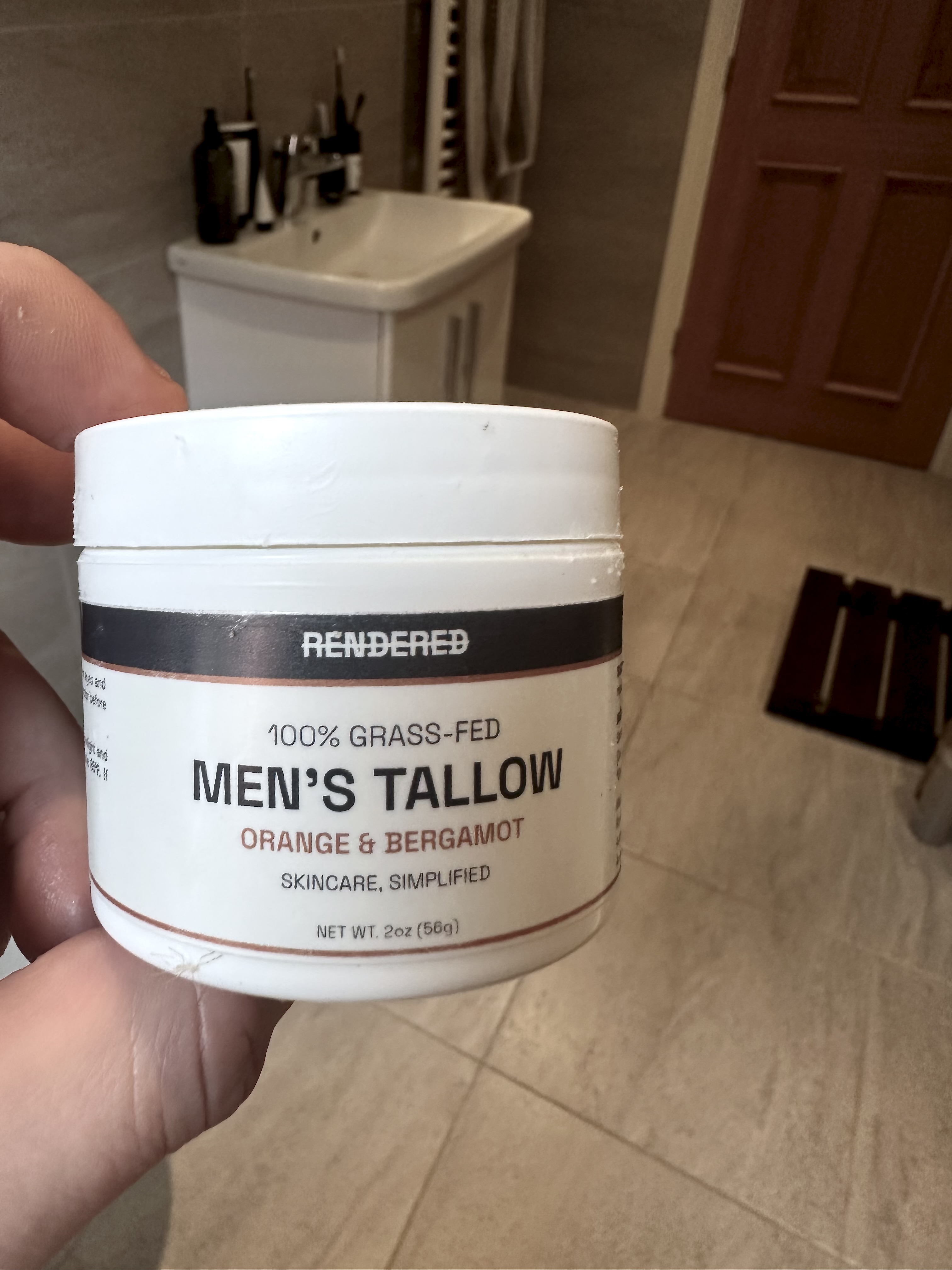
However, this time I decided I was going to do things differently. I started Rendered, a men's skincare brand built around beef tallow, from a more personal place. I'd spent years fighting my acne with products that never quite worked, and I didn't believe a rendered animal fat would do anything either. It turned out to be the thing that actually did, so I built a brand around it.
The biggest shift is that I lead with psychology now. Before anything else I get inside the customer's head: the forums they read, the content they consume, and the language they actually use, to find the real reason they buy rather than the surface desire. Then I write to that, and I build everything so the data from each test feeds the next rather than starting from scratch. The aim is to always know why something worked, so I can do it again on purpose.
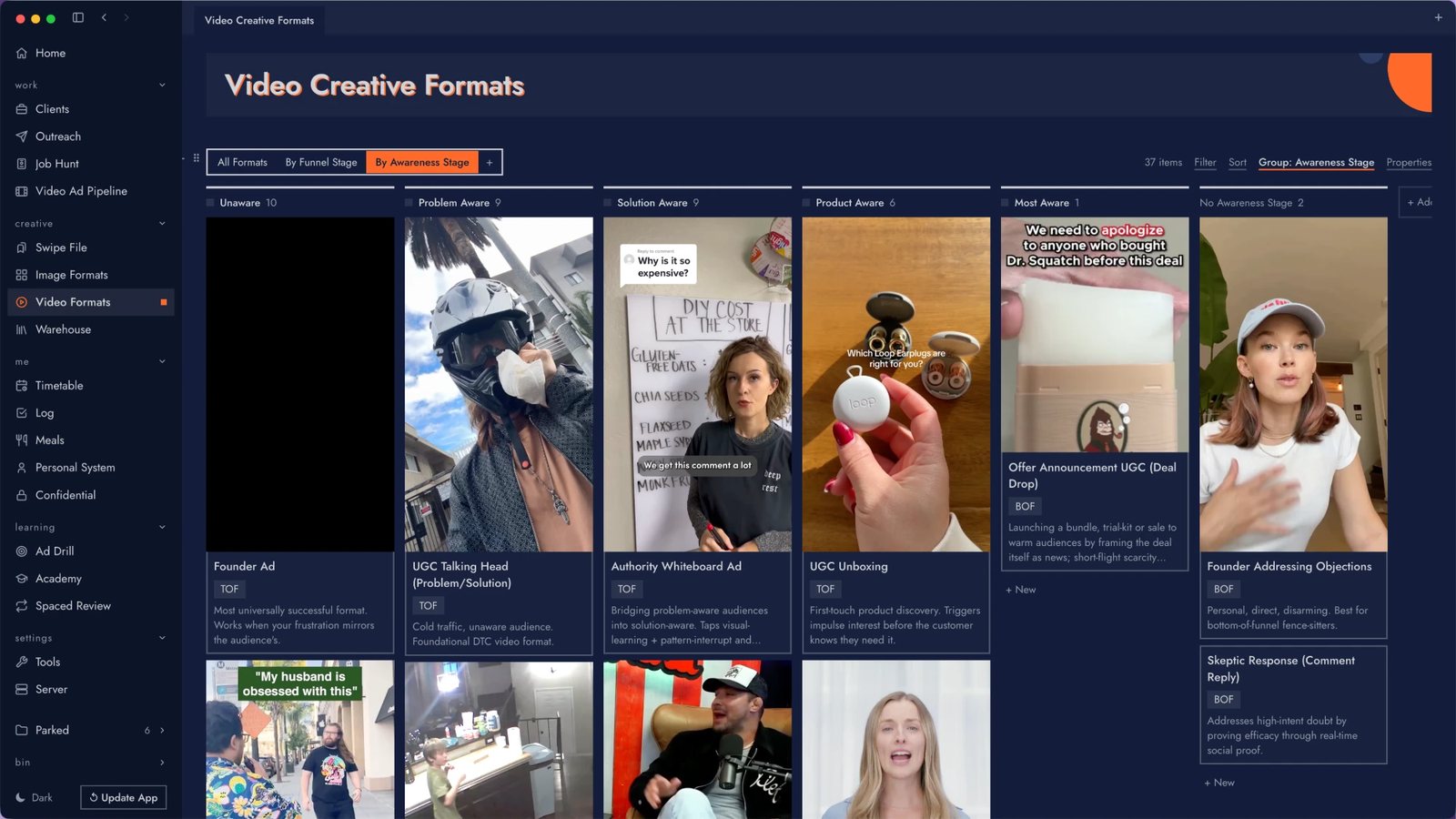
I've leaned heavily on systems this time too, to the point where I've literally written my own software, Rendered OS. It's built into Claude, so I can link it to my creative workflows and to the Meta API for spotting patterns across the ad account. And because I'm still learning, I've built a full learning platform inside it: it turns anything I upload into science-based modules, with a spaced-repetition system so I'm more likely to remember everything I've learned.
It all starts with the customer's psychology, long before the creative gets ideated. This is how I work with my brand.
Before I make anything, I dig into the customer, mining reviews, Reddit threads, comments and competitor ads for their exact words and the real reason they buy, rather than the surface desire.
I turn the raw research into three documents for each persona, a deep persona profile, a pain-moment dossier, and a bank of tagged angles, so that every ad pulls from the customer's actual language instead of guesswork. I build them once and then use automated systems that update them over time.
I distill the batch across an Andromeda signal map, including TEEP, valence, language intensity, awareness stage, self-concept and funnel stage. This ensures each creative provides a different signal to Meta, letting me make the most of my limited volume output.
I log every test with a hypothesis for why it won or lost, measured against what I expected going in. Most of this runs inside Rendered OS now: the image pipeline links to the Meta API and to Claude, so it can see the actual ad, the image, headline and primary text, right next to its metrics. Then I run my hypothesis prompts over all of it, loaded with context I've tuned myself, so the reasoning carries forward and the system keeps getting sharper.
What I want next is to do this with more behind me than I have on my own. At the moment I'm looking for a junior role at a DTC startup or agency, where I can learn from more experienced strategists, sharpen my skills, and help other brands grow.
The cream was on my nightstand. The blood was on my sheets. At 3am I was done.
Not done like I was going to do something dramatic. Done like a man who has seen the same evidence a hundred times and this time understood what it was telling him.
Twenty-two years.
I got my first steroid cream when I was fifteen. The patches were on the backs of my knees. My mom called the doctor, he wrote a prescription, she applied it twice a day for two weeks, and the patches cleared.
We were all so relieved we never asked why they came back.
They always came back.
You learn to manage it. You time the applications, you layer it under the moisturizer, you judge which tube is strong enough for a bad week.
And each time the patches came back a little worse, the doctor would write a stronger prescription. More potent. More frequent.
I didn’t notice what was happening to my skin until a coworker pointed it out. “The skin there looks really thin,” she said. She wasn’t being rude about it, just concerned. But she was right.
By my mid-thirties the patches had spread. Inner elbows. Neck. The backs of my hands in winter.
I stopped wearing short sleeves to work. Started shaking hands with my left when my right was bad so people wouldn’t feel the scale. Told myself it wasn’t a big deal.
It was a big deal.
3am last October is where I drew the line. I woke to that familiar burn, looked at my arm in the dim light, found the marks where I’d scratched through in my sleep. I’d stripped the sheet and remade the bed so many times before my wife woke up that I’d gotten good at it.
Sitting in the dark that night I thought: the cream isn’t working. The cream was never working. The cream is making it worse.
I want to tell you about everything else I tried before that night.
CeraVe (which made my neck worse, turns out I was reacting to something in it). Aveeno cream. Vanicream. Oatmeal baths three times a week. A seven-week elimination diet. Cotton gloves taped at my wrists so I couldn’t scratch through in my sleep. An air purifier. Silk pillowcases. A different laundry detergent.
Every one of those things made some small difference for about two weeks. Then the patches found their way back.
The derm I had was kind. She genuinely was. She’d look at my arms, nod, say something measured. Then she’d write a prescription. Stronger, usually.
I sat in the parking lot after the appointment and called my wife. Just to hear her voice. Didn’t tell her what I was feeling.
Men with eczema don’t really talk about what it costs them. We find workarounds. We quietly stop doing things: the gym, the short sleeves, the pool at the vacation rental. We don’t announce it. We just stop.
I had stopped expecting anything to change. That was where I was the morning Marcus asked me about my arms.
Marcus and I go to the same gym. He is big into ancestral health and the whole carnivore craze. I’d written him off as someone who would tell me to eat raw liver. But one morning in November he noticed my arms.
“How long have you been dealing with that?”
“Most of my life.”
“Have you ever thought about what your skin is actually made of?”
I hadn’t. Not in those terms.
He said: think of your skin like a brick wall. The bricks are your skin cells. The mortar between them is a mixture of fats your body makes. When that mortar is solid, everything works: moisture stays inside, irritants stay out, your skin is calm.
With eczema, your body doesn’t make enough of that mortar. So the wall has gaps. Moisture escapes through the gaps. Bacteria get in through the gaps. Your immune system fires every time something gets in. That’s the redness, the itch, the flare.
What does the steroid cream do? It damps down the immune response. It quiets the alarm.
But the gaps are still there.
“You’ve been silencing that alarm,” he said. “Nobody’s been fixing the wall.”
I sat with that for a minute.
“So what fixes the wall?”
“You give it what the mortar is actually made of. The right fats. The ones your skin already knows how to use.”
He explained it like this. Your skin barrier is made of a specific mix of fats. With eczema, those fats are constantly being depleted, so the wall crumbles faster than your body can rebuild it.
The problem is that most moisturizers are primarily water. They feel soothing at first, but water evaporates. They can’t rebuild the mortar because they’re not made of the right material.
Beef tallow is. The two main fatty acids in tallow are the same two your skin produces in its own oil. Your skin recognizes them. It knows what to do with them. It uses them to start patching the gaps rather than just soothing the surface.
“That’s why the cream keeps stopping working,” he said. “The wall keeps crumbling. You need to give the wall what it needs to hold.”
“You’re telling me to put beef fat on my eczema.”
“I’m telling you to stop putting out the fire and start rebuilding the wall.”
I didn’t do anything for two weeks. I went down a rabbit hole at midnight a few nights running: forums, studies, whatever I could find.
And the more I read the more it held up. The fats in tallow, the fats your skin barrier is actually built from, they’re the same ones. I kept waiting to find the part where it fell apart and I couldn’t find it. I just kept finding more reasons why what Marcus said made sense.
Twenty-two years of quieting the alarm.
I kept coming back to that.
Then I ordered a small jar of grass-fed beef tallow balm. Didn’t tell my wife. I wasn’t ready to say out loud that I thought I’d been approaching this wrong for most of my adult life.
It arrived on a Thursday. I left it on my desk for two days without opening it.
I don’t know what I was waiting for. Permission, maybe. Or just the right amount of tired.
Saturday night I opened it in the bathroom after a shower. The smell is faint, not unpleasant, just animal, real. Nothing like a cream. The texture is thick, more like a balm you’d use on a bad cut than something you’d put on your face.
I worked a small amount into my inner elbow, the worst patch, and stood there waiting for the sting I’d been trained to expect from everything else I’d ever tried on broken skin.
It didn’t sting.
It just sat there. Quietly. Doing something or doing nothing, I had no idea which.
I went to bed, laying there in that specific way you lie when you’re waiting to see if your body is going to betray you.
I woke up at 6am.
Not 3am. 6am.
I didn’t move for a minute. Just lay there trying to work out if something was different or if I was still half-asleep. The sheets were clean. My arm felt something I couldn’t quite name. Not fixed. Not transformed. Just quieter.
I didn’t tell anyone. Didn’t want to jinx it. Didn’t want to be the person who got excited about one good night and then had to walk it back.
The first week I kept waking up expecting to find blood and finding nothing. By the end of that week I realized I’d stopped bracing for it.
Week three something shifted in how the skin looked. The angry red at the edges of the patches was different, not gone, but less livid. Less like inflammation and more like skin that had been through something and was on its way back.
I found myself touching my inner elbow in the shower just to check, the way you press a bruise. But what I kept finding was that the texture was changing. The rough, almost crusted surface was softening at the edges. I’d catch myself just running a finger along it, surprised each time.
By week six I stood in the bathroom and touched the crook of my arm properly, the way I used to avoid doing because of what I’d find there. And it was just skin. Not perfect. But smooth in a way it hadn’t been in years.
Week ten my wife was sitting next to me on the sofa and she reached over and touched my forearm. Not dramatically. Just rested her hand there the way she used to before I’d started unconsciously angling my arms away from people.
She looked up.
“They look different.”
“I know.”
She didn’t push it. She just left her hand there.
That was the moment, I think. Not the clean sheets. Not the first morning I woke at 6am. It was her hand resting on my arm like it was nothing, like it was just an arm, like there was nothing to avoid.
I wore a short-sleeved shirt to the office the following Friday. Didn’t make a decision about it. Just reached for it.
I’m not going to tell you the eczema is gone. It isn’t. I still have bad weeks. What I don’t have is the 3am routine: the waking, the sheets, the cream that quieted things down until they weren’t quieted down anymore.
It’s been four months.
I just think about the version of me sitting in the dark last October, convinced this was simply what his life was going to be.
I spent twenty-two years managing something nobody ever told me could be approached differently.
If that’s where you are right now, I just wanted you to know it doesn’t have to stay that way.